What Is Visa Sponsorship? A Complete Guide for Job Seekers
Enyong Carinton Tegum
Published on January 14, 2026

If you have ever scrolled through international job listings from Lagos, Nairobi, Accra or Buea, you have almost certainly seen the phrase visa sponsorship. It is one of the most important — and most misunderstood — terms in the global job market. Understanding exactly what it means can be the difference between wasting months on applications that go nowhere and landing a role that legally moves you abroad.
So, what is visa sponsorship? In simple terms, visa sponsorship is when an employer in another country formally agrees to support your application for the legal right to live and work there. The company vouches for you to that country's immigration authorities, and in most cases handles (and often pays for) a large part of the paperwork. This guide breaks down the visa sponsorship meaning in full, how the process works step by step, and what it means specifically for African applicants.
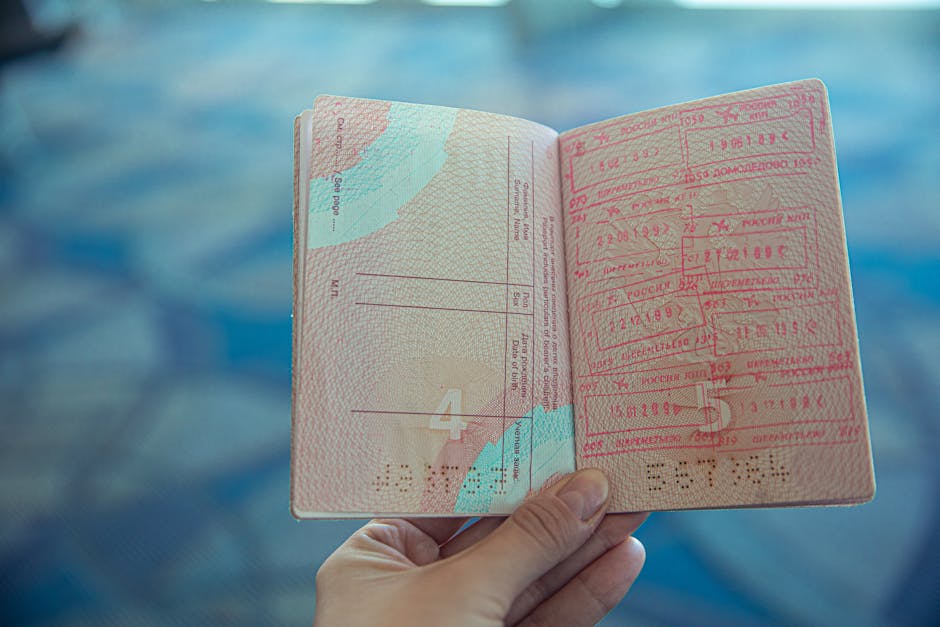
Visa Sponsorship Meaning: A Clear Definition
When people ask what a visa sponsorship is, they are usually picturing something far more complicated than the reality. At its core, the visa sponsorship meaning is straightforward: a licensed employer becomes your official sponsor so that a government will grant you a work visa or work permit.
Governments do not normally let foreign nationals simply show up and start working. They require a trusted local entity — almost always an employer — to confirm three things: that a genuine job exists, that you are qualified to do it, and that the company will take responsibility for you while you are in the country. That confirmation is what visa sponsorship means in practice.
Without a sponsor, most skilled-work visa routes are simply closed. With one, a clear, legal pathway opens up. This is why, for the vast majority of Africans seeking to work overseas, securing a sponsoring employer is the single most valuable step in the entire journey.
How Visa Sponsorship Actually Works (Step by Step)
The exact process differs by country, but the underlying sequence is remarkably consistent across the UK, Canada, Germany, the Netherlands, Australia and most other destinations:
- The employer is licensed to sponsor. In many countries an employer must hold a sponsor licence (the UK), be approved for an LMIA (Canada), or be registered to issue contracts that qualify for a work permit (much of the EU). Not every company can sponsor — this is why your job search must target the ones that can.
- You receive a job offer. You apply, interview, and the company decides to hire you. The offer is the foundation of everything that follows.
- The employer issues a sponsorship document. This might be a Certificate of Sponsorship (UK), an LMIA-backed job offer (Canada), or a signed work contract used for a national work visa (EU). This document tells the embassy the job is real and you are the chosen candidate.
- You apply for the visa. Using that document, you submit your visa application, biometrics, medicals and supporting evidence to the destination country's immigration service or embassy.
- You relocate and begin work. Once approved, you travel, settle in, and start your role — legally.
Throughout this process, a good employer will guide you, and many cover government fees, legal costs, and sometimes flights and initial accommodation. That financial and administrative support is the real-world value of sponsorship.
What Visa Sponsorship Covers (and What It Does Not)
It is important to set expectations. Visa sponsorship typically does include the employer's legal authorisation to hire you, the official documents you need, and often the associated immigration fees. Depending on the company's generosity, it may also include relocation support.
It usually does not guarantee permanent residency on day one (although many sponsored routes lead to it over time), and it does not remove your responsibility to be genuinely qualified, to pass background and medical checks, and to meet the salary or skill thresholds the destination country sets.
Which Countries Offer Visa Sponsorship to Africans?
Several countries actively recruit international talent and have well-defined sponsorship routes that are realistic for African professionals:
- United Kingdom — the Skilled Worker visa, with thousands of licensed sponsors across healthcare, IT, engineering, hospitality and care work.
- Canada — employer-driven routes backed by an LMIA, plus pathways that can lead to permanent residency.
- Germany — the EU Blue Card and the Opportunity Card (Chancenkarte) for skilled workers, with strong demand in engineering, IT and nursing.
- Netherlands, Ireland and other EU states — highly skilled migrant and critical-skills routes.
- Australia and New Zealand — employer-sponsored skilled visas in shortage occupations.
- Gulf states and parts of Asia — large markets where employer-sponsored work permits are the norm.
On TontonAfriJobs, every listing is screened so you only see roles that sponsor a visa, allow remote work from Africa, or are explicitly open to African applicants. You can browse verified visa-sponsorship jobs here instead of guessing which listings are genuinely open to you.
The Real Cost of Visa Sponsorship, Country by Country
One question almost every applicant has: how much does this actually cost, and who pays it? The honest answer is "it depends on the country and the employer" — but here is what the fees genuinely look like in 2026, so you can budget realistically and spot an employer who is under-selling (or overcharging for) sponsorship:
- United Kingdom — the Certificate of Sponsorship fee (paid by the employer) plus the visa application fee and the Immigration Health Surcharge, which together commonly run into the low thousands of pounds for a multi-year Skilled Worker visa. Many employers absorb the sponsor-side costs and reimburse the health surcharge; ask directly rather than assuming.
- Canada — an LMIA application carries a government processing fee paid by the employer (several hundred Canadian dollars), separate from your own work permit application fee and biometrics fee, which you typically pay yourself unless your offer states otherwise.
- Germany — the Opportunity Card and Blue Card routes have modest visa fees (typically under €100), but budget for document translation and credential-recognition costs, which can add up if your qualifications need formal assessment.
- Australia — employer-sponsored skilled visas carry a Skilling Australians Fund levy paid by the employer, on top of your own visa application charge, which varies by visa subclass and is one of the higher fees globally.
- Gulf states — work permit costs are usually paid entirely by the employer as standard local practice, with minimal cost exposure for the worker.
The pattern that matters most: the employer almost always carries the cost of being a sponsor, while some or all of your personal visa fees may fall to you depending on the offer. Always get this in writing before you resign from your current job or make travel plans.
Common Myths About Visa Sponsorship
Misinformation costs applicants real opportunities. Here are the myths that come up most often, and the reality behind each:
- Myth: "Only huge multinational companies sponsor visas." Reality: small and mid-sized employers sponsor constantly, especially in care work, hospitality, IT and skilled trades — company size has little to do with sponsor eligibility.
- Myth: "You need a master's degree to be sponsored." Reality: many sponsored routes are built around experience and vocational certification, not academic degrees — care assistants, welders, chefs and lorry drivers are sponsored every year.
- Myth: "Sponsorship guarantees you can stay forever." Reality: most sponsored visas are tied to your job and have a fixed validity, though several routes (the UK's Skilled Worker visa, Canada's employer-driven pathways, Germany's Blue Card) do lead to permanent residency after a qualifying period.
- Myth: "If a job doesn't mention sponsorship, you can still ask and they'll say yes." Reality: sponsoring requires the employer to hold a specific licence or approval in advance — you cannot create that eligibility by asking; if they are not already licensed, they usually cannot sponsor you no matter how much they like you.
- Myth: "Agencies who promise guaranteed sponsorship for a fee are legitimate." Reality: this is one of the most common scams targeting African job seekers. No genuine employer or government route requires you to pay a third party to "guarantee" sponsorship.
How to Spot a Genuine Visa Sponsorship Job
Many listings hint at sponsorship without confirming it, and some quietly exclude foreign applicants. Look for clear, positive signals such as:
- "Visa sponsorship available" or "we sponsor work visas"
- "Relocation package" or "relocation assistance provided"
- "Open to international applicants" or "applicants worldwide welcome"
- The employer appearing on an official register of licensed sponsors
Be cautious of red flags like "must already have the right to work in the country", "no sponsorship available", or "local candidates only". These phrases usually mean the door is closed before you start.
What Visa Sponsorship Means for African Applicants Specifically
For talented people across Africa, the barrier to global work has rarely been ability — it has been access and information. Employers post roles openly, then quietly filter out applications from African locations. Sponsorship is the legitimate route through that wall, because a sponsoring employer is, by definition, willing to hire from outside the country.
The practical strategy is simple: stop applying to roles that cannot sponsor, and concentrate your energy on the ones that can. Pair that focus with a strong, tailored CV, and your odds improve dramatically. Our free AI CV builder can tailor your CV to a specific sponsored role and the destination country's expectations, which matters because a CV that wins in Canada looks different from one that wins in Germany.
Frequently Asked Questions
What is visa sponsorship in simple words?
It is when a company abroad officially supports your application for a work visa, telling that country's government that they want to hire you and will take responsibility for employing you legally.
Does visa sponsorship mean the job is free to apply for?
Yes — applying is free. Reputable employers never ask candidates to pay them for sponsorship. Be very wary of anyone requesting money in exchange for a sponsored job offer; that is a common scam.
Who pays for visa sponsorship?
It varies. Some employers cover all immigration fees and even relocation; others cover the core sponsorship costs while you pay your own visa fee. The job description or offer letter should make this clear.
Can I get visa sponsorship without a degree?
Often, yes. Many sponsored roles — care work, hospitality, skilled trades, transport and more — value experience and certifications over university degrees.
How long does visa sponsorship take?
From job offer to arrival, it commonly takes one to four months, depending on the country, the visa route, and how quickly documents are processed.
Can my family join me under my sponsored visa?
In most major sponsorship routes — the UK Skilled Worker visa, Canada's employer-driven pathways, Germany's Blue Card and Opportunity Card — a spouse/partner and dependent children can usually apply as dependants, often with the right to work themselves. Rules and costs vary by country, so confirm the specifics for your exact visa route before you commit to a timeline.
What happens if I lose my job under a sponsored visa?
This depends on the country and visa type. Many sponsored visas are tied to the specific employer, so losing the job can start a countdown (often 30–90 days) to find a new sponsor or leave the country. Some countries offer more flexibility through grace periods or job-seeker permissions. Always check your specific visa conditions rather than assuming.
Is visa sponsorship the same as a work permit?
They're closely related but not identical. Sponsorship is the employer's commitment that unlocks the process; the work permit (or work visa) is the actual government-issued authorisation that results from it. You need the sponsorship to get the permit, not the other way around.
Key Takeaways
Visa sponsorship is the legal bridge between your skills and a job abroad: an employer vouches for you so a government grants you the right to work. It is real, it is widely available in healthcare, tech, care work, engineering and trades, and it is the most reliable route out of the application black hole that so many African job seekers fall into.
Ready to act on it? Browse verified visa-sponsorship and remote jobs on TontonAfriJobs, then build a tailored CV for the exact role and country you are targeting.
Related guides
Keep building your move abroad with these in-depth guides from TontonAfriJobs:
- What Is a Work Visa Sponsorship? How Employers Sponsor Foreign Workers
- How to Write a Visa Sponsorship Letter (With Free Template)
- Qatar Jobs for South Africans: How to Get Sponsored in 2026
Ready to act? Browse current visa-sponsored and remote jobs open to Africans or build a country-tailored CV with our free CV builder.

Written by
Enyong Carinton Tegum
Founder, TontonAfriJobs · Full-Stack Developer · SEO & Digital Marketing · CCNA & Google IT Certified
Enyong Carinton is a full-stack web developer, SEO and digital marketing specialist from Buea, Cameroon, and the founder of Tonton Business. Drawing on over a decade of building for the web, he created TontonAfriJobs to connect Africa's workforce with legitimate visa-sponsored and remote jobs abroad — and to end the silent rejections African applicants face.
Read full profile & credentialsGet new visa-sponsored & remote jobs in your inbox
Join thousands of African professionals. New opportunities and relocation guides, no spam — unsubscribe anytime.
Related Articles